
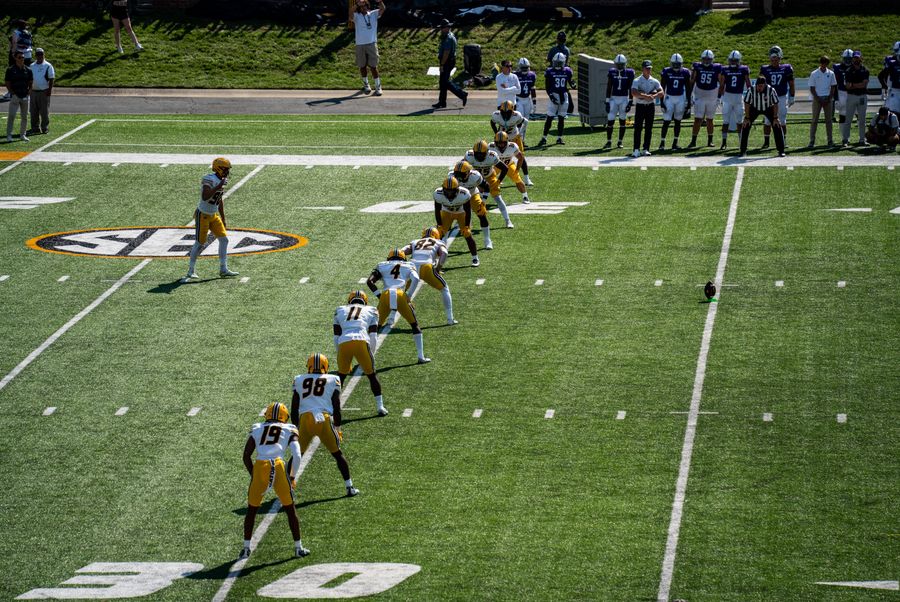
Imagine you’re watching a football game. The quarterback takes the snap, but he’s not standing directly behind the center. Instead, he’s several yards back, eyes scanning the defense, ready to unleash a pass. You’ve just witnessed the shotgun formation—one of the most significant innovations in football history.
Today, the shotgun is everywhere. According to data provided by TruMedia Networks, 60 percent of NFL plays now begin in the shotgun, a dramatic rise from just 19 percent in 2006 . At the college level and even in youth football, the formation has become so dominant that many quarterbacks and coaches know almost nothing else .
But what exactly is the shotgun formation? Why did it evolve from a risky gimmick to the backbone of modern offenses? And despite its popularity, why do some coaches argue it actually hurts teams in critical situations?
This comprehensive guide answers all those questions and more.
What Is the Shotgun Formation? The Basic Definition
In its simplest terms, the shotgun formation is an offensive alignment where the quarterback stands five to seven yards behind the line of scrimmage, rather than directly behind the center . The center snaps the ball through the air directly back to the quarterback, who catches it and then surveys the field .
Key Characteristics of the Shotgun:
- Quarterback Depth: Positioned 5–7 yards behind the line of scrimmage
- Snap Type: An aerial snap from the center (often called a “shotgun snap”)
- Backfield Alignment: Usually features a running back beside or slightly behind the quarterback
- Receiver Distribution: Receivers are often spread wider to create passing lanes
The term “shotgun” reportedly comes from the way the formation “sprays” receivers around the field, similar to how a shotgun scatters pellets . The alignment of players also suggests the shape of an actual shotgun .
The Birth of the Shotgun: A History of Innovation
The 1960s: Red Hickey and the San Francisco 49ers
The modern shotgun formation was born from necessity in November 1960. San Francisco 49ers head coach Red Hickey was preparing to face the Baltimore Colts, who boasted a fearsome pass rush led by defensive tackle Big Daddy Lipscomb . Hickey feared for his quarterbacks’ safety, so he devised a radical solution.
He had his quarterbacks take snaps seven yards deep rather than from under center. This would give them more time to spot receivers and disrupt the Colts’ defensive schemes .
The result was a stunning 30-22 upset of the heavily favored Colts on November 27, 1960 . Bob Waters, the third-string quarterback, led the attack and even threw the first touchdown pass ever from a shotgun formation . The play started as a pass to tight end Dee Mackey, who lateraled to halfback R.C. Owens for the score .
The Shotgun Misfires
The 49ers had success with the shotgun in 1960, winning three of their final four games. But in October 1961, the Chicago Bears exposed a critical flaw. Linebacker Bill George moved up to the line of scrimmage and attacked the center relentlessly. The Bears harassed 49ers quarterbacks all afternoon and won 31-0 .
After that devastating loss, Hickey retired the formation . The shotgun was dead—or so it seemed.
The 1970s: Tom Landry and the Dallas Cowboys Revival
The shotgun’s true legacy began when Dallas Cowboys coach Tom Landry revived it in the 1970s with a much more refined version. In 1975, Landry approached quarterback Roger Staubach about using the shotgun on third downs and in two-minute drills .
Staubach’s initial reaction? “I thought he was crazy or something… Nobody used the shotgun” .
Landry and assistant coach Mike Ditka knew the Cowboys needed a spark. They had gone 8-6 in 1974 and missed the playoffs for the first time in nine years. The shotgun gave Staubach a better view of the field and helped him find running lanes more effectively .
The strategy worked. Staubach’s completion percentage jumped from 52.8 percent in 1974 to 56.9 percent in 1975, with six more touchdown passes. The Cowboys reached the Super Bowl that season, and Staubach fell in love with the formation .
From there, the shotgun slowly but surely spread across the NFL and eventually to all levels of football.
Why Teams Use the Shotgun: Strategic Advantages
The shotgun formation offers several compelling benefits that explain its widespread adoption.
1. Improved Quarterback Vision
The primary reason for using the shotgun is simple: better vision. From five to seven yards behind the line, the quarterback can see the entire defense from the moment the ball is snapped . Under center, the quarterback must take a drop-back step before he can fully survey the field.
This extra second of recognition can be the difference between completing a pass and taking a sack. The quarterback can read coverage faster and find open receivers more quickly .
2. More Time Against the Pass Rush
The shotgun gives the quarterback a built-in buffer against aggressive pass rushers . A blitzing defender has more ground to cover before reaching the quarterback, buying a small but crucial amount of extra time.
This is why teams often use the shotgun on third down and long situations, when the defense knows a pass is coming and may send extra rushers .
3. Better Pocket Formation
The offensive linemen have more room to maneuver behind the scrimmage line and can form a tighter, more cohesive “pocket” around the quarterback . This reduces clutter and makes it easier to pick up blitzing defenders .
4. Enhanced Mobility for Running Quarterbacks
Mobile quarterbacks thrive in the shotgun. The extra space gives them more room to scramble, find running lanes, and extend plays . Roger Staubach discovered this in the 1970s, and today’s dual-threat quarterbacks like Lamar Jackson and Jalen Hurts have taken it to another level.
5. Natural Fit for Spread Offenses
The shotgun pairs naturally with spread passing, RPOs (Run-Pass Options), zone read concepts, and tempo offenses . When the quarterback is already set back, he can quickly survey the defense and make decisions without needing to drop first.
6. Useful Against Aggressive Defenses
The shotgun can be an effective counter to blitz-heavy defenses. With the quarterback already deep, the defense’s timing is disrupted, and pressure packages become less effective .
The Downsides of the Shotgun: Why It’s Not Always the Best Choice
Despite its popularity, the shotgun formation has significant weaknesses that coaches must consider.
1. Predictability
The shotgun is primarily associated with passing plays. When a team lines up in the shotgun, defenses often anticipate a pass and adjust their coverage accordingly . This can make the offense predictable, especially if they use the formation too frequently.
The best offenses mix their formations, using both under-center and shotgun snaps to keep defenses guessing .
2. Difficult to Run the Ball
Running plays are harder to disguise from the shotgun. Defenses can often read a shotgun snap as a passing situation and adjust their run fits . While some running plays can be run effectively from the shotgun, they are generally less powerful than downhill runs from under center .
3. Goal-Line Liability
This is perhaps the most significant weakness. At the goal line, the shotgun can be a disaster. A USA Today Sports study reviewed every goal-line offensive play for 15 top college programs and found striking results:
- From the opponent’s 1-yard line, teams scored on just 56% of shotgun snaps
- That compares to a 73% touchdown rate from under center
Despite this disparity, offensive coordinators called the shotgun more often—90 shotgun looks versus 72 under-center plays .
David Cutcliffe, a 40-year coaching veteran, explained why the shotgun struggles at the goal line:
“The snap moves the ball from the 1-yard line to the 6-yard line to begin the play, even more if a pass is called and the quarterback retreats another step or two. That gives defensive penetration a better opportunity to not only prevent a score but make a stop for negative yardage” .
Indiana defensive coordinator Bryant Haines put it even more bluntly:
“I love for the quarterback to be 5 yards deeper taking the snap. As a defense, we’re fighting for every single inch in that area of the field. The deeper I can get him, the further away from the center, that play is better for me” .
4. Higher Snap Risk
The shotgun requires a longer, aerial snap from the center. This carries a higher risk of a botched snap—a muffed exchange that can lead to fumbles, lost yardage, or defensive scores .
Nick Saban learned this lesson the hard way after a bad shotgun snap cost his team a critical goal-line opportunity. His response? “It was not smart on our part to do what we did, and we get a bad snap after all that” .
5. Exposure to Pass Rush
Paradoxically, while the shotgun gives the quarterback more time against the rush, it also gives defensive players clearer rushing lanes . Without the clutter of a traditional backfield, fast defenders have more direct routes to the quarterback.
Shotgun vs. Under Center: A Direct Comparison
The Shotgun in Modern Football
Today, the shotgun has become the default formation for many offenses at every level of football. Some teams use it for nearly every snap .
The Pistol Variation
A related formation is the pistol, where the quarterback lines up shorter than the shotgun—typically 3–4 yards behind the center—with a running back directly behind him. The pistol offers a compromise between the shotgun’s passing advantages and the under-center running game’s deception.
RPOs and Read-Option
The shotgun is the natural home for Run-Pass Options (RPOs) and read-option concepts . These modern plays require the quarterback to read a defender and decide whether to hand off, run, or pass. The shotgun’s spacing and vision make these decisions easier .
Why Coaches Stick with the Shotgun
Despite the goal-line data and the formation’s weaknesses, coaches continue to favor the shotgun. Why?
David Cutcliffe offers the most honest explanation:
“An entire generation of coaches grew up on the shotgun, and many view under-center play as little more than a relic… If you don’t know it, you can’t just look at a film and say, ‘Let’s do this'” .
The shotgun has become so pervasive that coaches don’t know how to teach under-center play anymore. They default to what they know—and what they know is the shotgun.
Real-World Example: The Shotgun’s Goal-Line Failure
The shotgun’s goal-line weakness was on full display in the 2025 College Football Playoff semifinal between Texas and Ohio State. The Longhorns had the ball on the Buckeyes’ 1-yard line with 3:16 remaining, a yard away from tying the score at 21.
On second-and-goal, Texas ran a sweep from a shotgun formation. The play was smothered for a 7-yard loss. Two plays later, Ohio State linebacker Jack Sawyer sacked Quinn Ewers and returned a fumble 83 yards for a game-clinching score .
The moment became a textbook example of why some coaches argue the shotgun should never be used at the goal line.
Conclusion: The Shotgun’s Lasting Legacy
The shotgun formation has come a long way from Red Hickey’s desperate experiment in 1960. It evolved from a quirky gimmick to a formation that dominates modern football at every level.
The shotgun’s advantages are clear: better quarterback vision, more time against the rush, natural fit for spread and RPO offenses, and enhanced mobility for dual-threat quarterbacks. These benefits have made it the foundation of the modern game.
But the shotgun is not a magic bullet. It struggles at the goal line, makes running the ball harder, can become predictable, and carries a higher risk of botched snaps . The best offenses understand these tradeoffs and mix their formations to keep defenses guessing .
The shotgun’s rise tells a story about how football evolves. An innovation born out of necessity became a defining feature of the sport. Coaches who grew up on the shotgun may not know how to teach under-center play anymore, but that’s the nature of progress—and perhaps a quiet warning about losing fundamental skills.
FAQs About the Shotgun Formation
Q: Why is it called the shotgun formation?
A: The term comes from the way the formation “sprays” receivers across the field, similar to how a shotgun scatters pellets. The alignment of players also suggests the shape of an actual shotgun .
Q: When was the shotgun formation invented?
A: The modern shotgun was first used by the San Francisco 49ers on November 27, 1960 .
Q: Is the shotgun better for passing or running?
A: The shotgun is primarily designed for passing plays, though some running plays (like zone read and draw plays) can be run effectively .
Q: Why is the shotgun bad at the goal line?
A: The shotgun snap moves the ball back 5–7 yards, making it harder to gain short yardage. A USA Today study found teams scored on just 56% of goal-line shotgun plays compared to 73% from under center .
Q: How far back does the quarterback stand in shotgun?
A: Typically 5–7 yards behind the line of scrimmage .
Q: What’s the difference between shotgun and pistol?
A: In the pistol formation, the quarterback lines up closer (about 3–4 yards) and has a running back directly behind him, offering a compromise between shotgun and under-center alignments.
Q: What percentage of NFL plays use the shotgun?
A: In 2024, about 60 percent of NFL plays started in the shotgun, up from 19 percent in 2006