
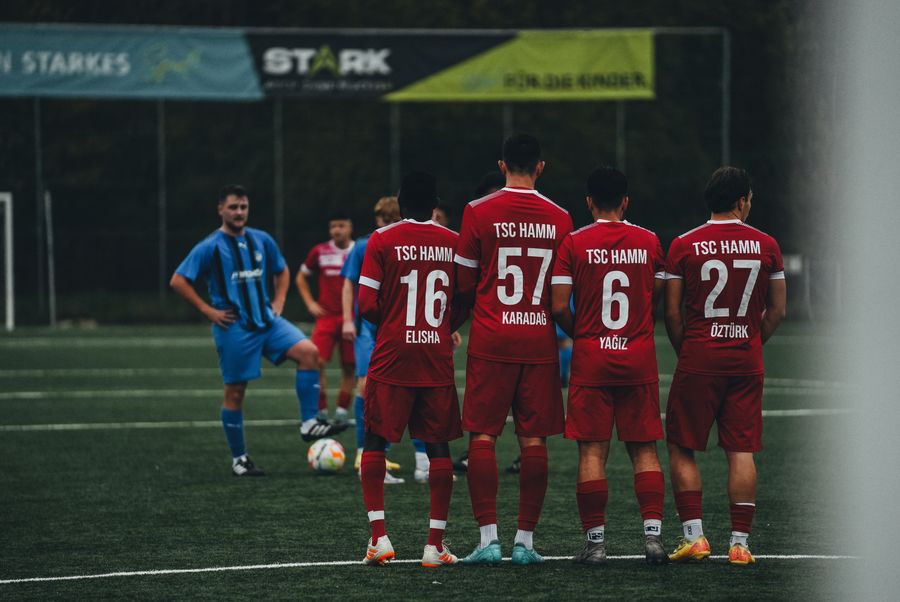
In the modern game, tactics are often discussed in terms of fluidity, positional play, and high pressing. Yet, there is an enduring concept that remains the bedrock of every successful team: the closed formation. While offensive, open systems capture the headlines with goals and flair, it is the disciplined “cerrado” (closed) approach that often wins championships.
For fans and analysts alike, the term “closed formation” can be confusing. It doesn’t necessarily refer to a specific set of numbers like 4-4-2 or 5-3-2, but rather to a philosophy and defensive structure. This article explores the tactical underpinnings of the closed formation, its historical roots in Catenaccio, its modern manifestations, and why it remains one of the most effective strategies in football today.
Defining the “Closed Formation” in Football
In football tactics, a closed formation refers to a team’s structure during the defensive phase . It is characterized by a compact shape where the lines between defenders and midfielders are compressed—often within 15 to 20 meters of each other—and spaces between players are minimized .
The primary objective is to “close” the interior channels. This forces the opposition to play in wide areas or attempt low-percentage crosses, effectively neutralizing the most dangerous central attacking zones . describes this as “tightening the spaces between defensive and midfield players, leaving no gaps for the opponent to move into.”
It is crucial to distinguish between the formation (the starting lineup shape) and the phase of play. A team may start in a 4-3-3 formation, but when they lose the ball, they close into a compact 4-5-1 or 5-4-1 shape. Therefore, a closed formation is less about the number on the team sheet and more about the collective behavior when defending. Modern teams that employ “mid-blocks” or “low-blocks” are, in essence, using a closed formation to deny space .
The Evolution of Closed Tactics: From Catenaccio to Modernity
To truly understand the closed formation, we must look at its most famous ancestor: Catenaccio (Italian for “door-bolt”).
The Birth of the Door-Bolt
Developed by Karl Rappan in Switzerland during the 1930s, and famously refined by Helenio Herrera at Inter Milan in the 1960s, Catenaccio was the ultimate closed strategy . It relied on a “sweeper” (libero) behind the defensive line to clean up any balls that broke through, and a rigid man-marking system.
This system often utilized a 5-3-2 or 5-4-1 shape, designed to completely shut up shop against superior attacking talent . It was incredibly successful but drew criticism for being overly defensive and negative . notes that “closed” approaches were historically associated with northern European and English styles, emphasizing pragmatism over flair.
From Static to Dynamic Closures
Modern football has evolved beyond the static “man-to-man” chains of Catenaccio. The contemporary closed formation is zonal and dynamic. Coaches like Pep Guardiola popularized “positional play,” but even his teams exhibit a closed structure out of possession. The “triadic closure” seen in Guardiola’s Barcelona—where players form triangles—is actually a method of closing down passing lanes using geometry .
Key Characteristics of a Closed Formation
1. Compactness (The Compression)
The hallmark of a closed formation is the tight distance between the defensive and midfield lines. By keeping this distance minimal, the team prevents the opposition from playing between the lines—the most dangerous area on the pitch. emphasizes that in Marcelino’s system, the defensive block is “compact and narrow,” aimed at shutting down interior spaces.
2. Narrow Width
While you might expect a “closed” team to spread wide to cover crosses, the strategy often does the opposite. Wingers and full-backs drop inside to protect the central area. explains that “wingers position themselves narrowly to block interior passing lanes.” This forces the opponent outside, where they are less dangerous.
3. The “Closed” vs. “Open” Dichotomy
This concept is often framed against the “open” game. An “open” formation spreads the pitch wide, creating space for attacking. Conversely, a “closed” formation shrinks the pitch. In 2012, analysts discussed how Tito Vilanova’s Barcelona was more “open” than Guardiola’s “closed” version. The “closed” Barça constricted the opposition more, though the “open” version created better attacking channels . When a team is described as “cerrado” (closed), it signifies a preference for security over risk .
4. Defensive Full-Backs
In a closed formation, full-backs rarely bomb forward. Their primary duty is to prevent wide penetration. As points out, in defensive setups like the 4-5-1, “full-backs remain cautious,” prioritizing defensive solidity over offensive width.
The Advantages of Playing “Closed”
Defensive Solidity
This is the most obvious benefit. By closing down the space, the team reduces the number and quality of chances the opponent creates. notes that this tactic is “very effective in closing defensive areas, significantly reducing the opponent’s threat on goal.”
Transition Opportunities (Counter-Attacking)
Paradoxically, sitting deep often yields the best attacking opportunities. By drawing the opponent forward, the defending team invites pressure. As soon as the ball is won, the closed formation allows the team to spring quickly into space . The 4-5-1 is described as “ideally set up to counterattack” because the “destroyer” wins the ball and instantly feeds the runners .
Resilience to Individual Errors
Because the emphasis is on collective positioning rather than individual flair, a closed formation is less susceptible to injuries or loss of form. highlights that this approach “relies on collective play, minimizing the impact of a single player, reducing damage in cases of absence due to injury or cards.”
The Disadvantages of Going “Closed”
Lack of Attacking Prowess
By focusing on defenders and midfielders staying back, the team often finds itself outnumbered in attack. notes that in the 4-5-1, “almost all of the attacking work is done by three or four players.” This can lead to a lack of goals and can be frustrating for supporters .
Vulnerability to Set-Pieces
A closed approach often results in the opponent dominating possession near the box. warns that this “may lead to the opponent getting penalties or free kicks close to the goal because the play is concentrated in their territory.”
The “Low Block” Trap
If a team sits too deep, they may concede control of the game completely. As describes, a team in a low block often “lures the rival into their own half only to repeat the variant with a long direct pass.” If the clearing pass doesn’t stick, the team is immediately under pressure again.
Frequently Asked Questions (FAQ)
1. Is a closed formation the same as “parking the bus”?
Not quite. “Parking the bus” is a derogatory term for an extreme version of a closed formation. A professional closed formation involves structured pressing and specific triggers to counter-attack, rather than just standing in a wall .
2. What formations are considered closed?
While any formation can be closed, the 4-5-1, 5-4-1, and 4-4-2 are the traditional “closed” shapes. They provide two solid banks of four or five players, making it difficult for the opposition to penetrate .
3. Did Barcelona ever play a closed formation?
Yes. While famed for their “open” tiki-taka, Pep Guardiola’s Barcelona were “closed” in their defensive shape. They were masters of the immediate counter-press, which is a form of closing down the opponent to regain possession quickly .
4. Is closed football dying?
No. In fact, the modern use of “variable systems” means most teams transition to a closed shape as soon as they lose possession. Even the most attacking teams like Manchester City or Arsenal utilize a closed “mid-block” when necessary .
Conclusion
The closed formation is the dark art of football. It is the foundation upon which many a title run has been built. Far from being a relic of the past, it has evolved from the rigid door-bolts of Catenaccio into the dynamic, fluid transitions of modern football. Whether it is a 4-4-2 pressing the wings or a 5-4-1 holding the fort, the principle remains the same: Shrink the space, protect the center, and wait for your moment.
Understanding the “closed” game is essential to appreciating the tactical battle that unfolds behind the highlight reels. It represents the ultimate test of a team’s discipline, concentration, and collective will.